Our approach
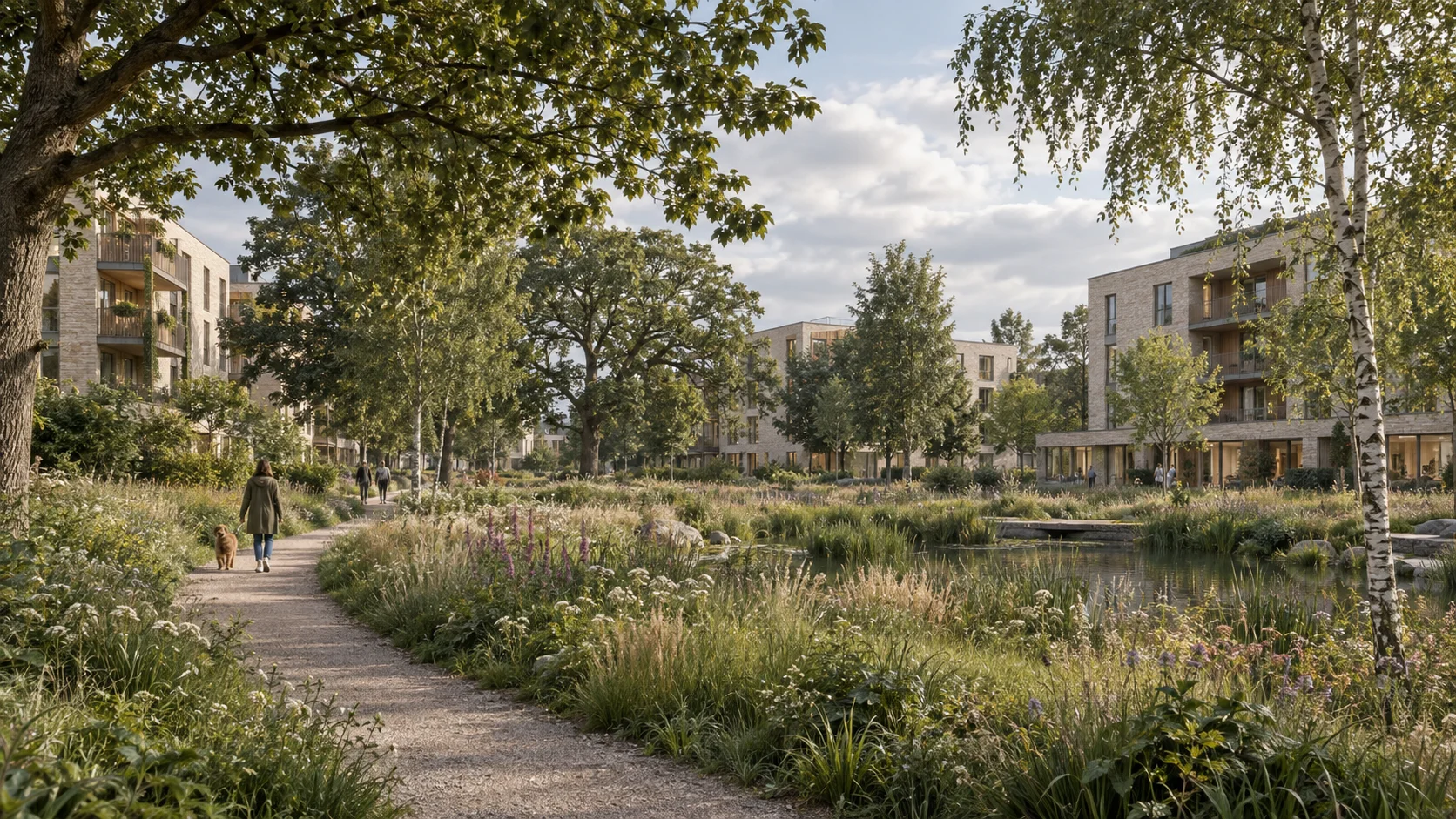
Begin with the site. Keep the whole place in view.
Connect landscape, daily life and environmental performance—from the earliest brief to the decisions about long-term care.
From setting to stewardship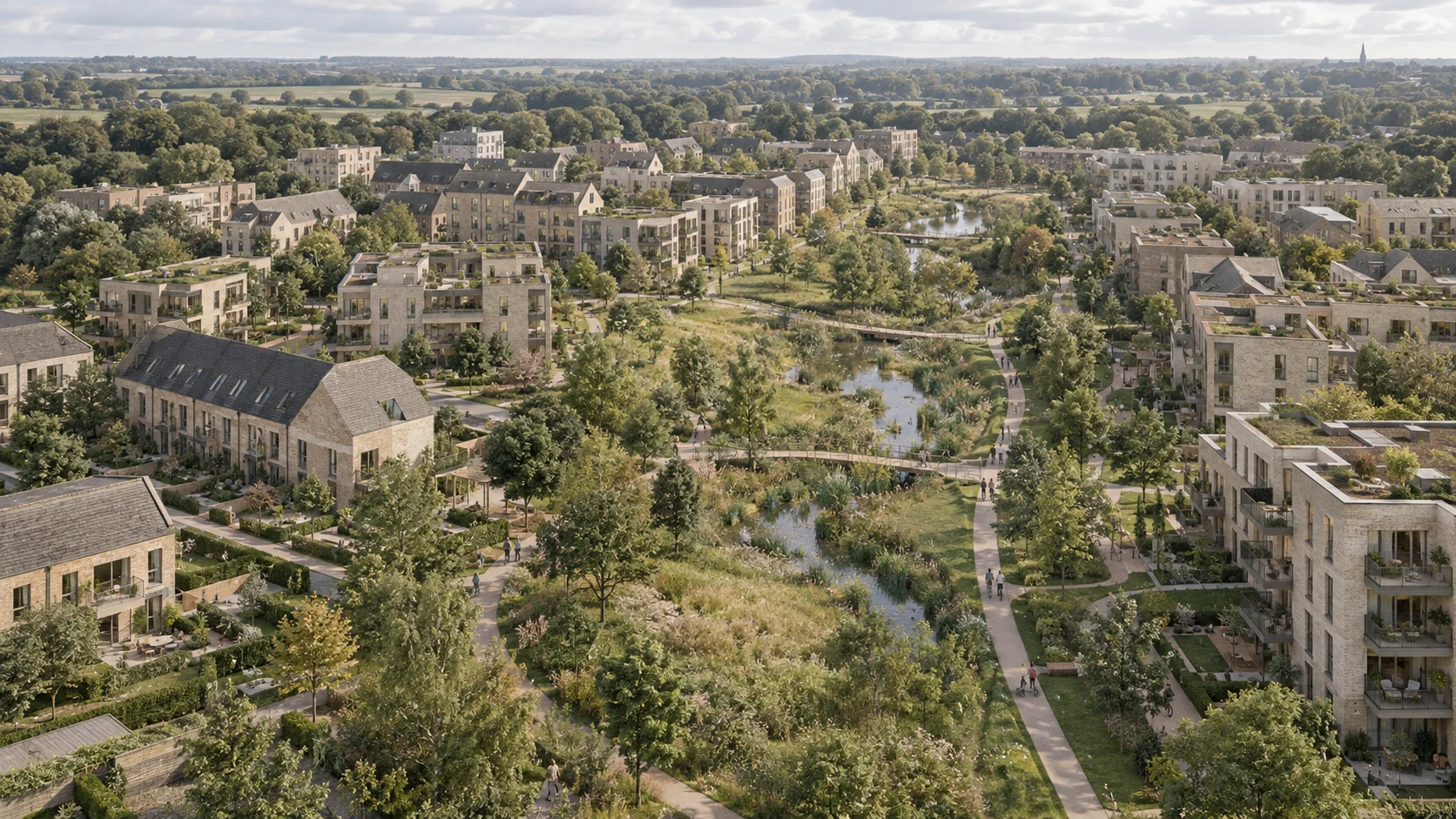
01 / Understand the setting
Make the brief a response to the place.
Start with what is already there: landscape, neighbouring uses, local connections and the needs of the people who may use the place.
The initial brief should bring opportunities and constraints into the same conversation, with the right specialist input to inform the next step.
- A basis for decisions
- A shared picture of the setting, its strengths and the questions a proposal needs to resolve.
02 / Plan with nature
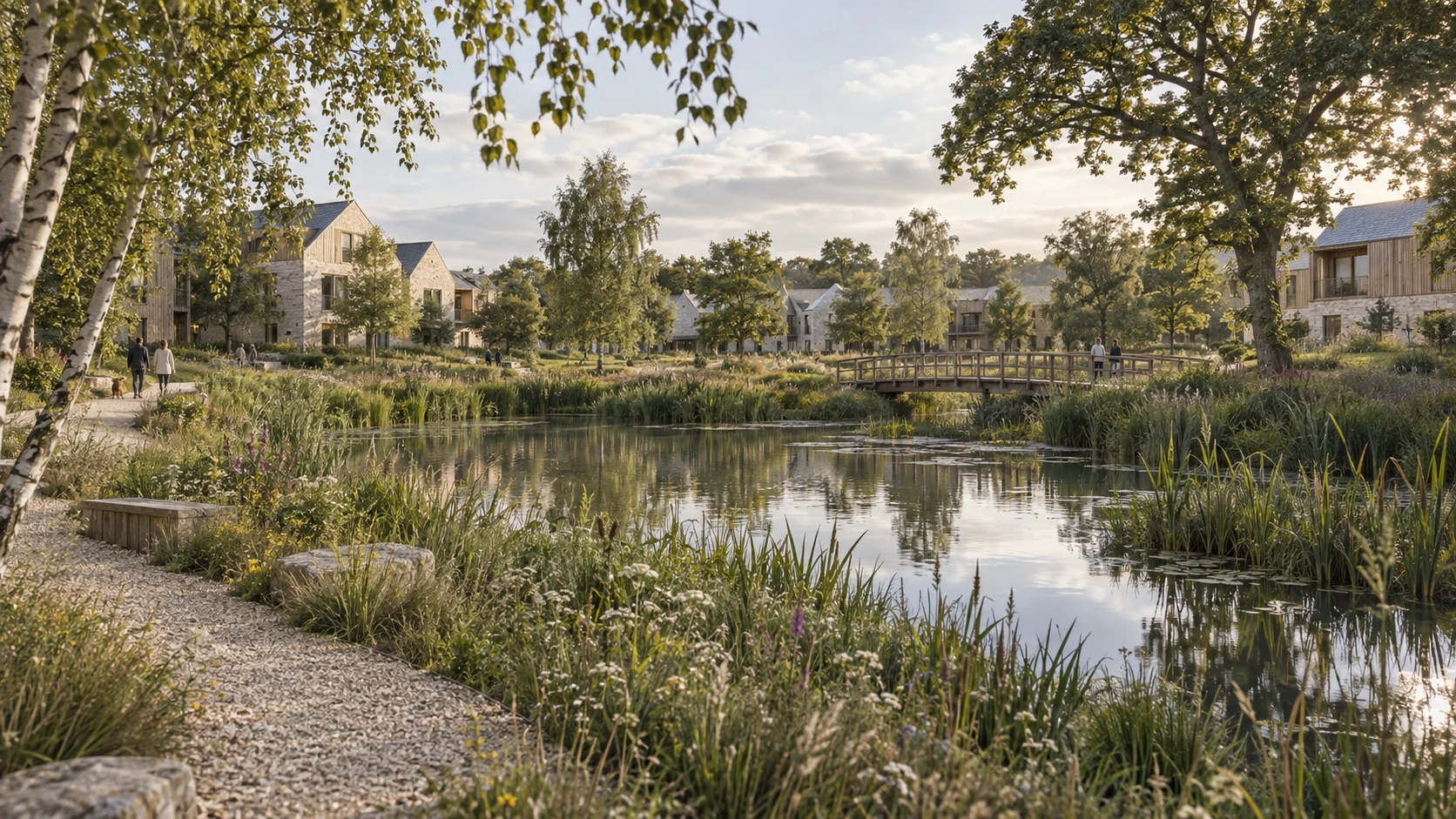
Give landscape a role in the plan.
Trees, habitats, planting and water should inform how buildings and routes are arranged. Green space needs a purpose beyond its appearance.
- Questions to test
- What can be retained? Where can nature connect? How will water and planting be cared for?
03 / Design for everyday life
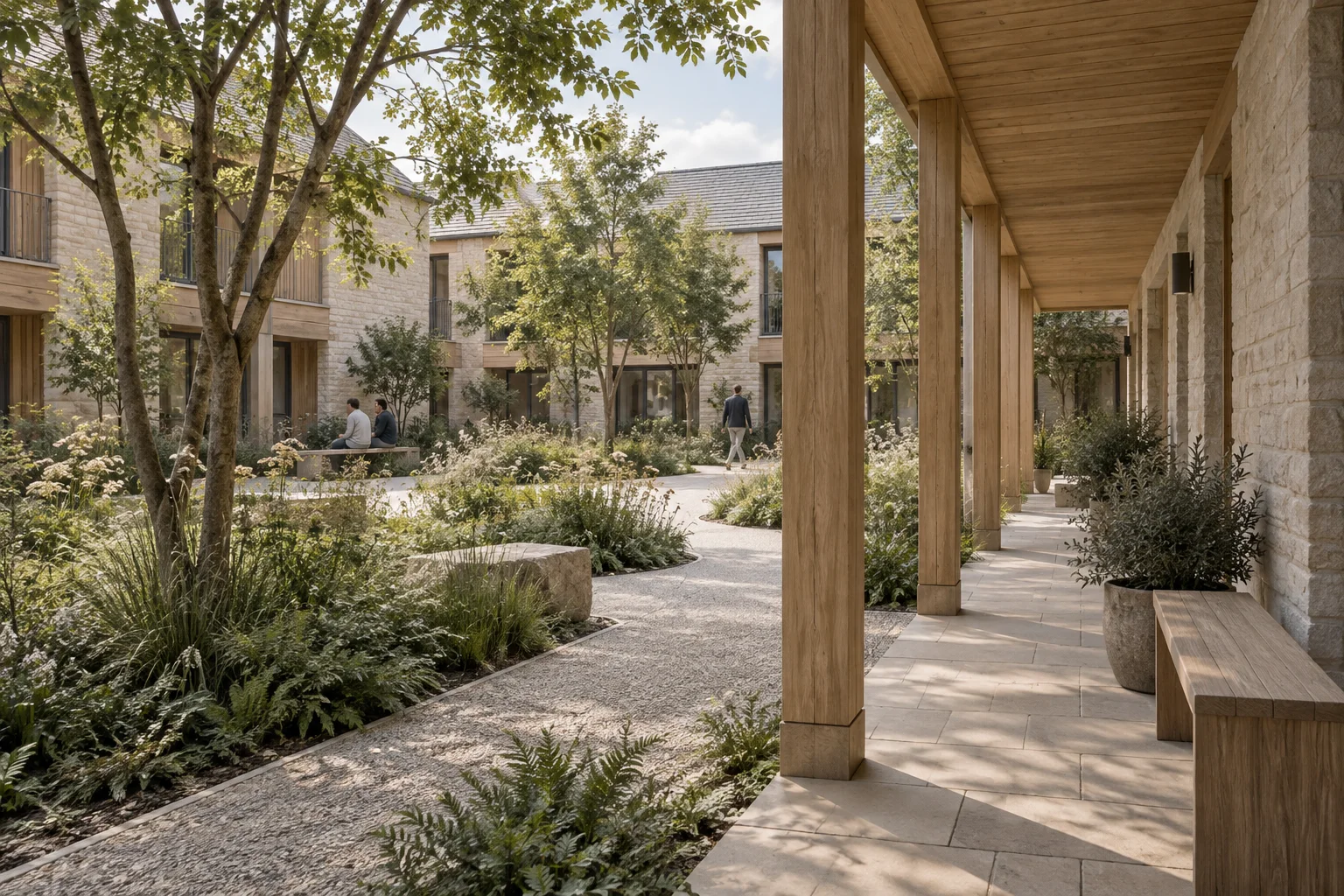
Think through the experience of a place.
Consider arrival, movement, access, daylight and comfort alongside the facilities a development might offer.
Shared gardens, places to pause and everyday amenities should respond to an identifiable need. Their relationship to routes and buildings is part of the design.
- The practical brief
- Who will use the space, how they will reach it and what will make it useful throughout the year.
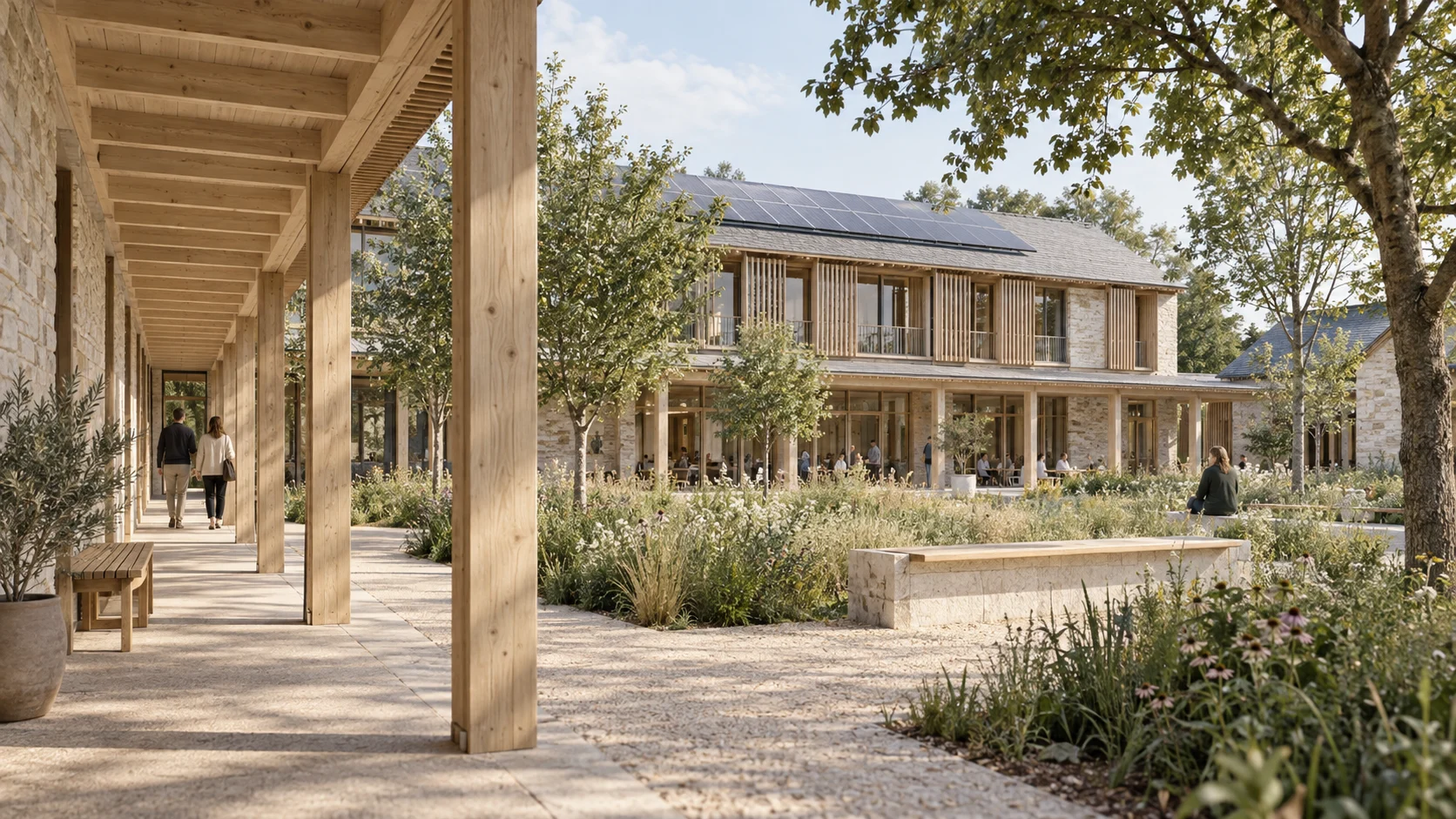
04 / Consider resources
Give environmental ambition a clear brief.
Our first envisioned project is targeting LEED Platinum. We intend to define its environmental objectives and establish how they will be assessed.
Layout, building form, materials, energy and water use need to be considered together, including opportunities to retain or adapt what is already there.
- Evidence to establish
- A site-specific baseline, options to compare and a clear route to assessing performance. Certification remains subject to project assessment and independent review.
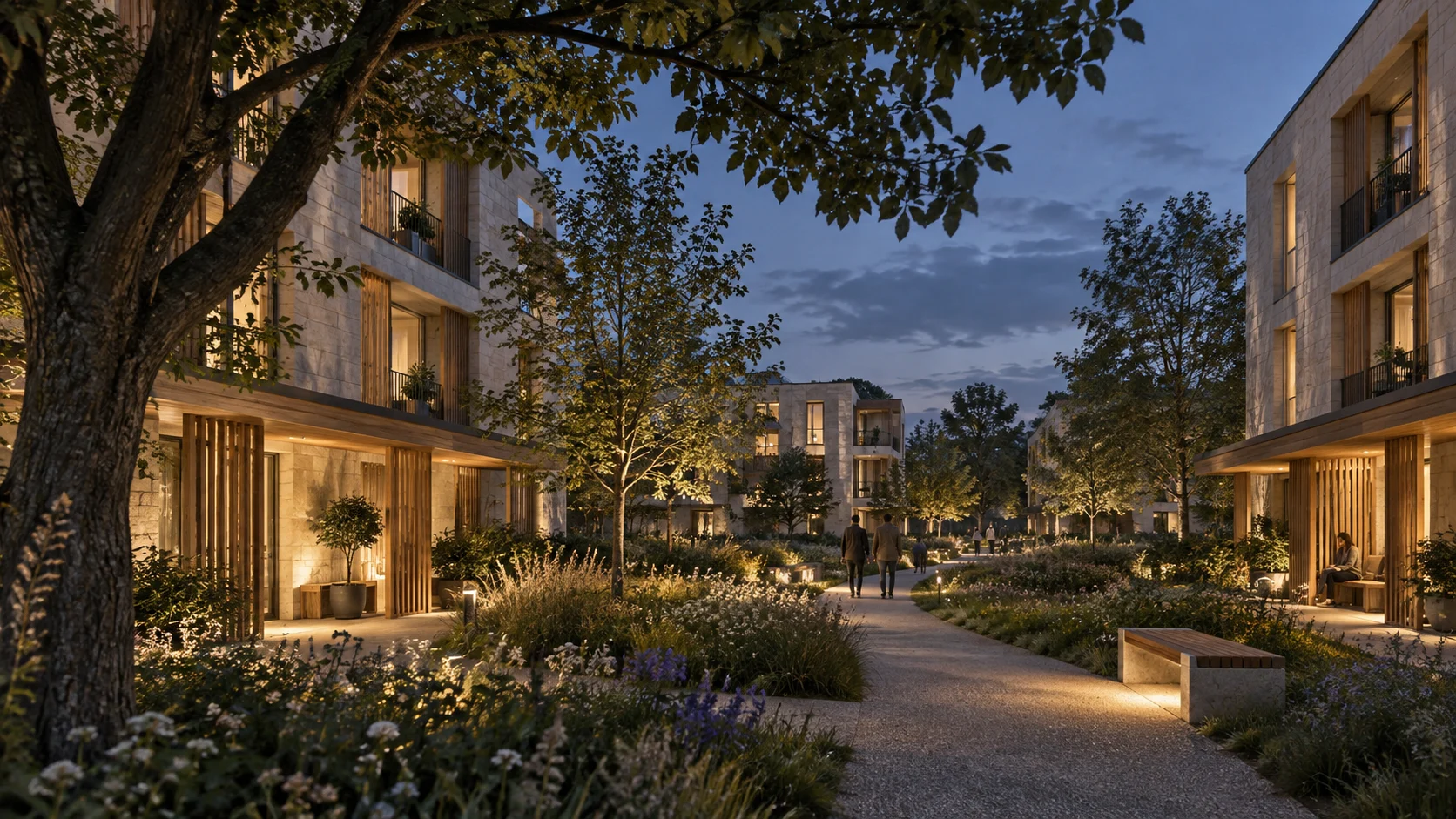
05 / Think beyond completion
Design for change, maintenance and care.
Durable materials, adaptable layouts and a workable approach to landscape care belong in the brief. Responsibilities need to be clear as a proposal moves towards delivery.
- The longer view
- What will need looking after, who will be responsible and how the place can remain useful over time.
From brief to review
Develop the idea.
Keep testing the decisions.
Our process is iterative. Learning at a later stage can change the brief, the design or the measures of success.
Understand
Gather the site context, needs and constraints.
Outcome: a grounded briefExplore
Compare layouts, landscape choices and environmental options.
Outcome: options to assessRefine
Bring specialist review into the practical and technical detail.
Outcome: a clearer proposalPlan for care
Connect delivery decisions with maintenance and future use.
Outcome: a long-term view
Questions that stay with the proposal
What will we review?
Landscape and water
Existing features, habitat connections, shade, rainfall and the care that planted spaces will need.
People and facilities
Access, comfort, useful amenities and the relationship between shared space and everyday routes.
Energy and materials
Resource demand, opportunities for reuse, material implications and the intended environmental performance.
Adaptation and stewardship
Durability, future changes of use and responsibilities for maintaining buildings and landscape.